
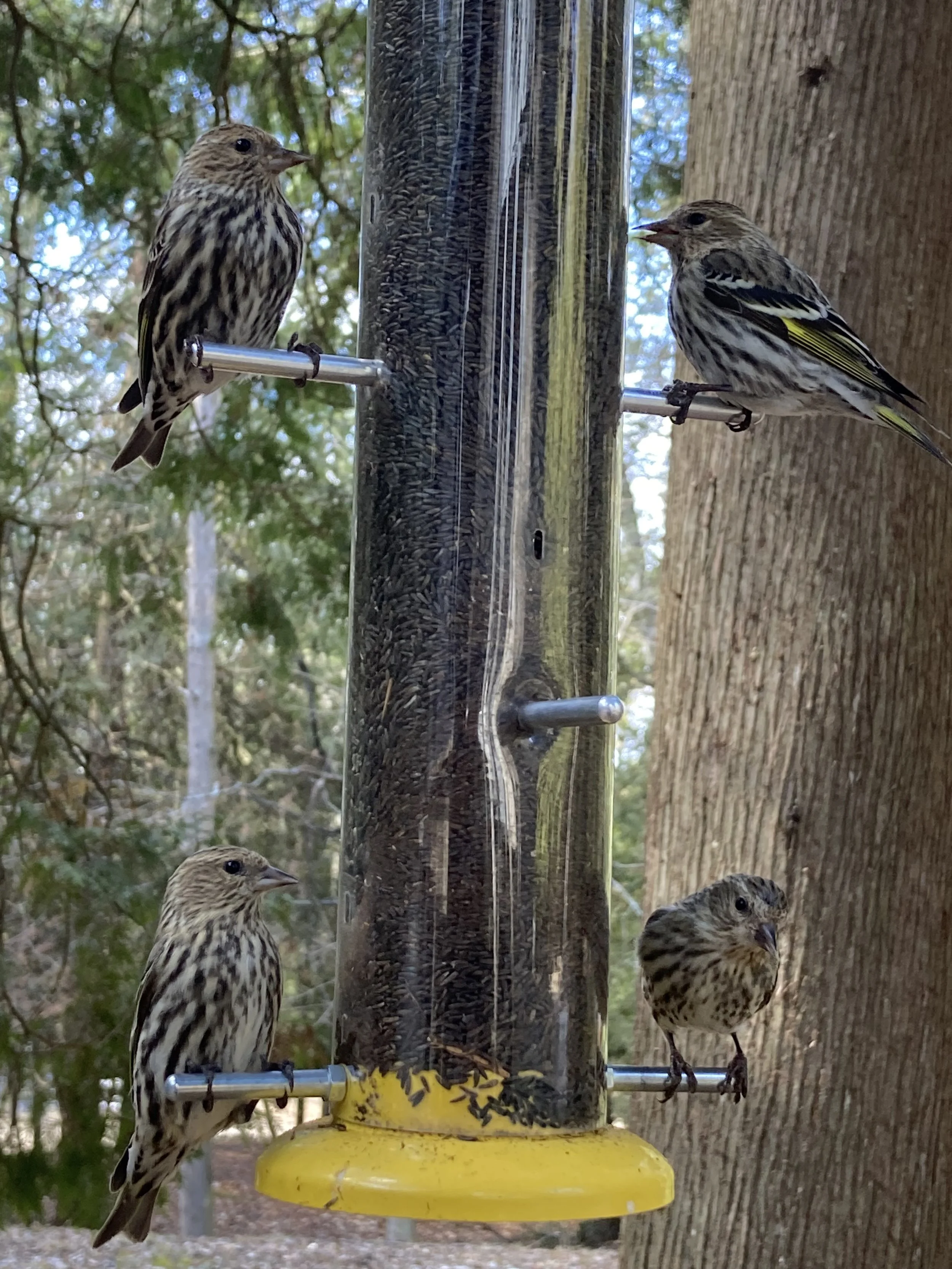
Healthy Backyard Birdfeeders
By Paul Leline, Secretary
Each morning, many of us enjoy one of the simplest pleasures of our own backyard… watching the birds visiting our feeder. Cardinals, chickadees, finches, sparrows, and other visitors bring movement and color right outside our windows. Yet, many of us probably do not realize the sad reality: bird populations around the world are declining. Birdlife International’s most recent assessment indicates that about 61% of the world‘s bird species have declining populations. Habitat loss and degradation, agricultural expansion, logging, invasive species, hunting, pollution, pesticides and climate change are among the major causes.
This decline reminds us that our relationship with wildlife carries responsibility. A backyard birdfeeder may seem insignificant compared with the global environmental problems, but it gives us an opportunity to become better stewards of the natural world. If we invite wild birds into our yards, we need to be responsible for providing a safe and healthy environment. That responsibility begins with the birdfeeder itself. A good feeder should be constructed from durable weather resistant material (like plastic, not wood) and designed so that the seed remains as dry as possible. It should have drainage holes, adequate ventilation, and surfaces that can be easily taken apart and thoroughly cleaned. Feeders that trap moisture, droppings or old seed can become breeding grounds for harmful bacteria and fungi.
Cleanliness is just as important as the feeder’s construction. Feeders should be cleaned regularly, particularly during warm or humid weather. Old or wet seed should never be allowed to accumulate. Spilled seed and discarded hulls beneath the feeder should be removed because they can become moldy and attract unwanted rodents. Wildlife experts recommend frequent cleaning and sanitizing of feeders with a 10% bleach solution to reduce the spread of diseases such as Salmonella and avian flu among birds.
The quality of birdseed matters too. We should purchase fresh seed, free of pesticides, from reputable bird food stores (specialty wild bird suppliers like Wild Birds Unlimited or Havegard), farm and feed stores, or established conservation organizations such as the Audubon Society. Black oil sunflower seed is an excellent choice because it is nutritious and attractive to many species. White proso millet, safflower, Nyjer seed, peanuts, and cracked corn can also be useful depending on the birds we wish to attract.
Consumers should recognize “filler“ material found in inexpensive seed mixtures. Ingredients such as red milo, wheat, and certain grains may be eaten by some birds, but are generally unpopular with many feeder species. And birds often reject these ingredients, causing the leftovers to accumulate beneath the feeder, where they can become wet, moldy and unhealthy.
Pesticides can do damage to birds in a number of ways: direct ingestion, starvation, and contaminated water. Pesticides can include some of the following:
Neonicotinoids (imidacloprid) is a systemic insecticide often applied to seeds (like grass seed) with a bluish coating that will dissolve into wet soil and enter a plant systemically through the roots to stop chewing and sucking insects from eating the plant. Eating just a few tainted seeds can be lethal to some smaller songbirds or cause weight loss or reproductive failure.
Organophosphates (like malathion, parathion, diazinon, chloropyrifos) are neurotoxic chemicals used to kill insect pests in agricultural applications only. Many of these chemicals are now banned for private home use but still remain in the agricultural setting. These chemicals can be immediately fatal to some birds when directly exposed. In lesser concentrations, birds can experience disorientation during migration and difficulty maintaining proper body temperature. Reproductive success can drop due to altered hormonal levels, resulting in smaller clutch sizes and weak parental care.
Rodenticides (rat poison). This chemical is not usually found at the birdfeeder, but when used it can accumulate to toxic levels in predatory birds like hawks, owls and eagles when they catch and eat poisoned rodents. Rodenticides affect rodents and predatory birds by stopping the animals’ blood from clotting, leading to fatal internal bleeding.
Herbicides (weed killers like 2,4,D and glyphosate like Roundup) these chemicals indirectly affect birds by killing essential plants and insect habitats that some birds need for nesting and feeding their young, resulting in starvation.
Contaminated/Unhealthy Water can affect birds when drinking from contaminated water sources like puddles or bathing in unclean water like dirty bird baths. It is recommended that all feeding and bathing stations be cleaned and sanitized with the 10% bleach solution every two weeks.
Purchasing pesticide-free birdseed can be difficult. Organic seed is available and will be labeled so. If there is no package information about the seed being pesticide free, it has probably been grown under conventional agricultural methods with a greater chance of unwanted chemicals.
Since birdseed can become contaminated through moisture, mold, animal waste, insects, or improper storage, proper handling is important. Birdseed should be kept in a clean, dry, sealed container and replaced if it develops an unusual smell, becomes damp, or shows signs of mold.
Ultimately, the backyard birdfeeder is more than a place to watch birds. It is a small lesson in stewardship. Every seed we provide and every interaction we build with wildlife carries consequences. If we choose nutritious food, maintain clean feeders, protect birds from hazards, and respect their wild nature, we can make our backyard a safer place for birds. In a world where bird populations are under increasing pressure, responsible feeding is one small but meaningful way to care for our wild world that surrounds us. Let’s try to be sure to do all that we can to ensure our backyard birds’ health and help increase their population growth by not contributing to their decline.
Sources:
Birdlife International
U.S. Fish and Wildlife Service
Audubon Society
Wild Birds Unlimited
Havegard Birdseeds